
Nose Conditions
Nose Conditions
Nose

Allergic and Non-Allergic Nasal Conditions
01Allergic Rhinitis (Hay Fever)
Sensitivity to allergens inside the nose can cause bouts of sneezing, a clear runny nose, itching and congestion. Watery, itchy eyes may also be present. In some people symptoms appear in certain seasons, in others all year round, and they can affect sleep, work and school life.
The ENT examination assesses how long symptoms have lasted, their triggers and findings inside the nose. Where needed, referral for allergy testing can be arranged. Symptoms are managed through allergen avoidance, saline rinses and, as appropriate for the patient, antihistamines or anti-inflammatory nasal sprays.
02Nasal Symptoms of Seasonal Pollen Allergy
Rising pollen levels in spring and summer can cause seasonal sneezing fits, a runny nose, itchy nose and eyes, and congestion in sensitive people. Time spent outdoors, windy days and pollen counts can affect how severe symptoms are. Not every seasonal runny nose is an infection.
The assessment asks in which months symptoms get worse and whether there are eye complaints. Practical steps to reduce pollen exposure, suitable medication and regular follow-up can be planned. People whose quality of life remains significantly affected despite treatment may be referred to an allergy specialist if appropriate.
03Perennial (Year-Round) Allergic Rhinitis
House dust mites, mould or animal allergens can cause year-round nasal congestion, sneezing, itching and a runny nose. Symptoms may get worse in the bedroom, while cleaning or in certain environments. Persistent congestion is sometimes mistaken for catching colds frequently.
The examination distinguishes allergic swelling of the nasal lining from sinusitis, enlarged turbinates and other causes of blockage. Environmental changes, reducing contact with allergens, suitable nasal sprays and, where needed, oral medication may be used. If detailed allergy investigation is needed, this is done together with the relevant specialty.
04Non-Allergic Rhinitis (Vasomotor Rhinitis)
A runny or blocked nose can develop after exposure to perfume, cigarette smoke, strong smells, temperature changes, cold air or spicy food. These symptoms are not always due to allergy. In non-allergic rhinitis, the tissues inside the nose overreact to environmental triggers; itching and eye symptoms may be less noticeable than in allergic rhinitis.
The assessment looks at when symptoms began, the medicines being used and triggering environments; allergy and other nasal conditions are ruled out if needed. Avoiding triggers, saltwater rinses and nasal sprays chosen according to the main symptom can help. Not everyone is given the same medicine.
05Rebound Congestion from Decongestant Spray Overuse
When some short-acting decongestant sprays are used for longer than recommended, congestion can get worse once the spray wears off. People may then use the spray more and more often to get relief. This is called rhinitis medicamentosa, and it can also mask the symptoms of an underlying nasal condition.
The examination considers the type of spray, how often it is used and what caused the congestion in the first place. Treatment involves stopping or reducing the spray under medical supervision, supporting the transition with other medicines if needed, and caring for the inside of the nose. Using the same spray more often is not the way to solve the problem.
06Occupational Rhinitis and Irritant-Related Nasal Symptoms
A runny nose, sneezing and congestion can develop in workplaces with exposure to flour, wood dust, cleaning chemicals, paint fumes or strong odours. Symptoms that worsen during working hours or ease on days off may suggest a work-related nasal condition. The cause may be allergic sensitivity or direct irritation.
The ENT assessment reviews exposure history and nasal findings. Suitable protective measures, changes to the environment and medication for symptoms can be planned. If occupational allergy or effects on the respiratory system are suspected, assessment together with occupational health, allergy or chest medicine may be needed.
07Nasal Congestion in Pregnancy (Pregnancy Rhinitis)
Hormonal changes during pregnancy can cause swelling and congestion inside the nose. A runny nose, sneezing and difficulty breathing, especially at night, may occur. It is important to distinguish this from allergy, a cold or sinusitis; congestion in pregnancy does not always have the same cause.
Possible causes are assessed through nasal examination and history. The focus is first on safe nasal care, saline and healthy habits. If medication is needed, the decision is made in agreement with the obstetrician, taking into account the week of pregnancy and any other conditions; decongestants should not be used at random.
Colds, Sinusitis and Sinus Conditions
01Runny and Blocked Nose from the Common Cold
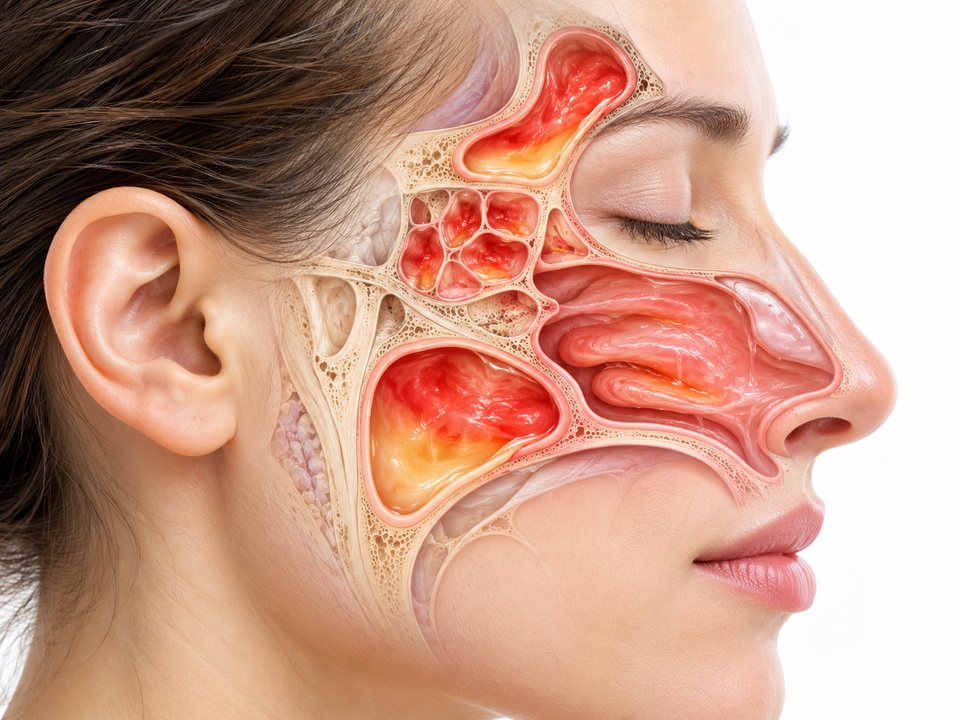
Viral upper respiratory infections such as the common cold can start with a runny nose, congestion, sneezing, a mildly sore throat and sometimes tiredness. Discharge that is watery at first may become thicker later. Yellow or green discharge alone does not mean antibiotics are needed.
For most viral infections, rest, plenty of fluids and suitable saltwater rinses to soothe the nose come first. An ENT examination helps identify other causes when symptoms last longer than expected, clearly worsen or affect only one side. The decision to use antibiotics is not based on the colour of the discharge alone.
02Acute Rhinosinusitis (Acute Sinusitis)
In acute rhinosinusitis, the lining of the nose and sinuses becomes inflamed. Nasal congestion, thick discharge, facial fullness or pressure and a reduced sense of smell may occur. Most acute cases follow a cold and are viral. Facial pain alone does not mean bacterial sinusitis.
The duration, severity and course of symptoms are important in the assessment. Where appropriate, pain relief, saline and nasal treatments recommended by the doctor can be used. If symptoms last a long time, get worse again while improving or serious signs appear, the patient is reassessed for a bacterial cause and possible complications.
03Lingering Sinus Symptoms After a Cold
After an upper respiratory infection has cleared, some people continue to have congestion, a runny nose, a feeling of mucus at the back of the throat and facial pressure for a while. This is sometimes linked to ongoing inflammation after the infection. Lingering symptoms do not always mean a new bacterial infection.
The history and nasal findings are reviewed to check for allergy, polyps, chronic sinusitis or another problem. Suitable nasal care, anti-inflammatory nasal treatments where needed and follow-up are planned. Symptoms such as high fever, swelling around the eyes or changes in vision need urgent assessment.
04Recurrent Acute Sinusitis
Having several clear sinusitis attacks a year, with symptoms disappearing between attacks, may call for assessment for recurrent acute rhinosinusitis. Allergic rhinitis, cigarette smoke, anatomical differences inside the nose or certain immune problems can play a part in recurring attacks.
The ENT consultation asks in detail about how long and how often attacks occur, medicines used before and the symptom-free periods in between. Rather than repeating the same treatment for each attack, the aim is to manage the underlying factors. Where needed, referral for imaging, allergy or other specialist assessment can be arranged.
05Chronic Rhinosinusitis (Chronic Sinusitis)
Symptoms such as nasal congestion, nasal or post-nasal discharge, facial fullness and a reduced sense of smell lasting 12 weeks or more may suggest chronic rhinosinusitis. The condition may be a long-term inflammatory process rather than just a microbial infection, with or without polyps.
Diagnosis combines symptoms with ENT examination and, where needed, endoscopic or imaging findings. For suitable patients, regular saltwater nasal rinsing, anti-inflammatory nasal sprays and control of any allergies form the basis of medical treatment. Cases that cannot be controlled are referred to an appropriate centre.
06Nasal Polyps (Nasal Polyposis)
Nasal polyps are usually benign soft-tissue growths that can develop on the lining of the nose and sinuses. They may be noticed through long-lasting congestion, a reduced sense of smell, post-nasal drip and recurrent sinus symptoms. Some patients also have asthma or sensitivity to aspirin and similar painkillers.
The nasal examination assesses whether polyps may be present; one-sided or unusual-looking growths may have other causes. Medical treatment may include intranasal corticosteroids as judged appropriate by the doctor, saltwater care and control of associated conditions. Advanced cases are referred to a specialist centre.
07Dental-Origin Sinusitis (Odontogenic Sinusitis)
One-sided sinus symptoms can develop after certain dental infections or dental procedures, particularly in the upper jaw. There may be congestion, foul-smelling discharge or pressure in the cheek on the same side. Not everyone with one-sided sinusitis symptoms has a dental cause; other conditions need to be ruled out.
The ENT examination considers dental treatment history together with sinus complaints. Where appropriate, a treatment plan targeting the cause of the infection is made, with coordination with the dentist and any necessary tests. Without correcting the underlying dental problem, temporary symptom relief alone may not bring lasting control.
Assessing Nasal Obstruction and Structural Problems
01Enlarged Turbinates (Turbinate Hypertrophy)
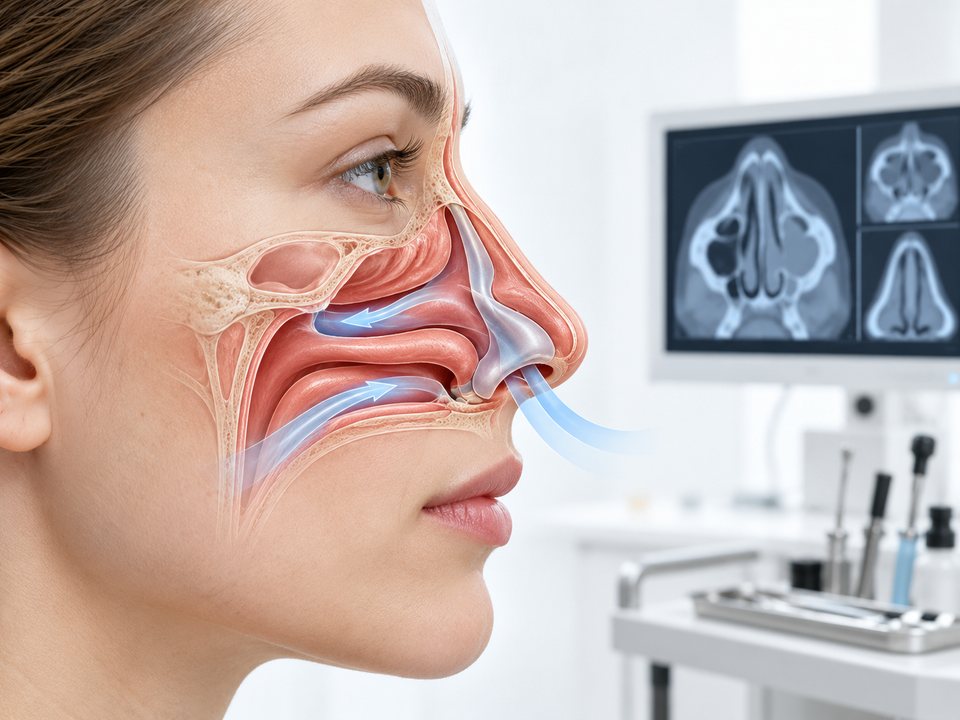
The turbinates are normal structures that warm and humidify the air we breathe. Swelling of these tissues due to allergy, irritation or long-term inflammation can make breathing through the nose difficult. The blockage may be felt on one side or both, may get worse at night and can lead to mouth breathing.
The ENT examination assesses the type of turbinate enlargement and contributing factors such as allergy or a deviated septum. For suitable patients, the swelling is reduced through allergy control, saltwater rinses and medical nasal sprays chosen by the doctor. If there is a permanent structural problem or resistant symptoms, referral for further assessment may be needed.
02Persistent Nasal Congestion
Nasal congestion that lasts for weeks or keeps coming back is not a diagnosis in itself but a symptom shared by various problems. Possible causes include allergic rhinitis, swollen turbinates, polyps, chronic sinusitis or a deviated septum. A reduced sense of smell, sleep problems, a dry mouth and difficulty during exercise may also occur.
In the assessment, whether the congestion is one- or two-sided, how it changes during the day and the medicines used are important. Medication, nasal care and follow-up are planned according to the cause. Getting temporary relief only from short-acting decongestant sprays may not solve the underlying problem.
03Deviated Nasal Septum
A deviated septum, the wall dividing the nasal cavity into right and left, can cause one-sided or two-sided blockage in some people. Associated conditions such as allergy and swollen turbinates can make symptoms more noticeable. Not everyone with a deviated septum needs treatment; what matters is the patient's symptoms and the examination findings.
The ENT examination assesses how much of the blockage is structural and how much is due to swelling of the nasal lining. Medicines do not straighten a deviated septum, but they can bring relief by reducing swelling caused by associated allergy and inflammation. Patients thought to need permanent structural correction are referred to a centre that offers surgery.
04Narrowing at the Nostril Entrance (Nasal Valve Problems)
If the narrowest airflow area at the entrance of the nose is weak or narrow, the sides of the nose can collapse inwards when breathing in, causing a feeling of air hunger. Symptoms may be more noticeable during exercise or sleep. This may be related to previous injury or surgery, or it may occur on its own.
The examination assesses the airway at the nasal entrance and any other causes of blockage. For suitable patients, nasal strips or nasal dilators can give temporary relief; swelling of the nasal lining is treated separately if present. Structural valve problems do not fully resolve with medication, and those who need it are referred for further treatment.
05One-Sided, Persistent Nasal Obstruction
Congestion that is always felt in only one nostril may be due to causes such as a deviated septum or local swelling. However, if it comes with one-sided bloody discharge, a bad smell, worsening blockage or facial swelling, a more detailed investigation is needed. Not every one-sided complaint is caused by a simple allergy.
The ENT assessment reviews the structures inside the nose and how long symptoms have lasted; further tests or referral to the appropriate specialty are arranged if needed. With one-sided symptoms of unclear cause, relying on nasal sprays alone for a long time is not advisable. The form of treatment depends on the diagnosis.
06Night-Time Nasal Congestion and Mouth Breathing
Nasal congestion that is milder during the day can become more noticeable when lying down. Allergic rhinitis, swollen turbinates and structural narrowing can contribute to mouth breathing during sleep, a dry mouth and snoring. However, snoring and pauses in breathing during sleep cannot be explained by the nose alone.
The nasal examination looks for the cause of the blockage; suitable treatments can be planned for allergy and swelling inside the nose. Loud snoring, pauses in breathing, morning headaches or excessive daytime sleepiness need separate assessment for sleep apnoea and, if necessary, referral to a sleep centre.

Runny Nose, Nosebleeds, Dryness and Smell Problems
01Nosebleeds (Epistaxis)
Nosebleeds usually occur when the delicate blood vessels at the front of the nose are damaged by dryness, irritation or forceful nose-blowing. With recurrent bleeding, blood-thinning medicines, blood pressure problems, infections and, more rarely, other causes may also be investigated. The amount of bleeding and any other symptoms are important.
For first aid, sit upright, lean slightly forward and pinch the soft part of the nose continuously for 10–15 minutes. Seek emergency help if the bleeding does not stop, is very heavy, started after an injury, or there is fainting or difficulty breathing. For recurrent bleeding, examination, moisturising the inside of the nose and cause-specific follow-up can be planned.
02Nasal Dryness and Crusting
Dry air, heating and air-conditioning systems, certain medicines or irritation inside the nose can cause dryness, burning, crusting and minor bleeding. Thick crusts can add to the feeling of a blocked nose. Long-lasting or foul-smelling crusting may also be a sign of certain specific nasal conditions.
The ENT examination assesses the nasal lining and the products being used. Suitable saltwater rinses, moisturising products recommended by the doctor and adjusting the humidity of the room can bring relief. Forcibly picking off nasal crusts is not recommended, as it can increase bleeding and irritation.
03Infection at the Nostril Entrance (Nasal Vestibulitis)
Inflammation of the skin at the entrance of the nostril may cause tenderness, pain, redness and yellowish crusts. Frequent nose-picking, heavy nose-blowing or plucking nasal hairs can damage the skin and make infection more likely. Some people notice a pimple-like spot at the entrance of the nose.
The assessment distinguishes minor irritation from bacterial infection. If the doctor considers it appropriate, local care and any necessary antibiotic treatment can be used. Rapidly spreading redness, marked swelling of the tip of the nose, fever or severe pain need prompt medical assessment; the spot should not be squeezed.
04Post-Nasal Drip
Feeling mucus from the nose and sinuses running down the back of the throat can lead to frequent throat clearing, a tickle, coughing and hoarseness. Allergic rhinitis, sinusitis, certain environmental factors and sometimes reflux can contribute. Post-nasal drip is a symptom, not a definite diagnosis on its own.
The nose and throat examination looks at the nature of the discharge, any associated congestion and possible causes. Treatment varies depending on whether the cause is allergy, infection or another problem. Suitable saltwater rinses, nasal treatment and, if needed, assessment by other departments for reflux or allergy can be planned.
05Persistent Watery Runny Nose
A clear, watery runny nose can occur in allergic or non-allergic rhinitis. Cold air, hot food and strong smells can trigger it in some people. However, a one-sided, spontaneous and continuous watery discharge linked to a recent head injury is a rare but important warning sign.
The assessment asks whether the discharge is one- or two-sided, what triggers it and whether there has been a head injury. For simple rhinitis, nasal treatments targeting the cause may be used. One-sided clear discharge after a head injury, a severe headache or other neurological symptoms require urgent assessment; this should not be left while trying sprays at home.
06Reduced or Lost Sense of Smell (Hyposmia / Anosmia)
The sense of smell may be reduced after upper respiratory infections, or in allergic rhinitis, chronic sinusitis or nasal polyps. Loss of smell can also affect the taste of food and make it harder to notice gas leaks or spoiled food. In some cases medicines, head injury or other health problems also play a role.
The ENT assessment looks at when it started, any history of infection or injury, and causes of blockage inside the nose. Depending on the cause, treatment of inflammation inside the nose and, for suitable people, smell training may be considered. Persistent loss may need further assessment; there is no guarantee that the sense of smell will return.
07Distorted or Phantom Smells (Parosmia / Phantosmia)
Parosmia is when a familiar smell is perceived differently from normal and is often unpleasant. In phantosmia, a smell is perceived when there is no source around. These conditions sometimes appear after a respiratory infection and can affect quality of life, appetite and daily comfort.
The onset of the complaint, triggering events, medicines used and any neurological symptoms are assessed. Nasal and sinus causes are investigated; smell training and follow-up can be planned for suitable cases. If a change in smell comes with new, pronounced neurological symptoms, urgent assessment by the relevant specialties may be needed.

Nasal Problems in Children and Special Situations
01Enlarged Adenoids (Adenoid Hypertrophy)
The adenoids are immune tissue in the area behind the nose. When enlarged in children, they can contribute to mouth breathing, nasal congestion, snoring, nasal-sounding speech or ear problems. Enlarged adenoids alone do not mean surgery is needed; the severity of symptoms and the child's development are what matter.
The ENT assessment considers breathing, sleep, hearing and any history of recurrent infections together. In suitable cases, associated allergy or nasal swelling is treated and follow-up is planned. If there are pauses in breathing during sleep, a marked effect on hearing or severe blockage, the child is referred to an appropriate centre for further assessment.
02Persistent Nasal Obstruction and Mouth Breathing in Children
A child who keeps their mouth open, breathes through the mouth at night or complains of a blocked nose may have allergic rhinitis, enlarged adenoids, nasal irritation or another cause. Snoring, restless sleep, daytime tiredness and changes in school performance may also occur.
The examination assesses nose and adenoid symptoms in an age-appropriate way, also taking into account any effect on the ears and hearing. Suitable medical treatment, preventive advice and follow-up are arranged where needed. If pauses in breathing are suspected, further investigation of breathing during sleep is recommended rather than relying on nasal sprays alone.
03Sinusitis and Prolonged Runny Nose in Children
Upper respiratory infections are common in children, and not every long-lasting runny nose is sinusitis. Symptoms that do not improve after more than ten days, worsening again while recovering, a long-lasting daytime cough or a marked runny nose may call for assessment for sinusitis. Allergy and adenoid problems can contribute to similar symptoms.
Treatment decisions depend on the child's age, how long the illness has lasted and the examination findings. Supportive care and suitable nasal treatments may come first; when a bacterial infection is suspected, the doctor decides on the necessary medicines. Swelling around the eyes, a high fever or a marked deterioration in general condition need urgent assessment.
04Foreign Objects in the Nose in Children
Young children may put objects such as beads, toy parts, paper or food into their nose. One-sided foul-smelling discharge, blockage, occasional bleeding or irritability may suggest a foreign body. Children do not always say that this has happened.
If a foreign body in the nose is suspected, assessment at a healthcare facility is needed. Trying to remove it at home with tweezers, sticks or water can push it further in. If a button battery or magnet is suspected in particular, go to the emergency department without delay; removal and follow-up are planned by a specialist team.
05Nasal Injuries and Post-Traumatic Symptoms
After a fall, sports injury or blow, pain, swelling, bleeding, bruising and difficulty breathing through the nose can develop. Although some nasal injuries are minor, the possibility of a change in shape, a collection of blood inside the nose or an associated head or facial injury must be considered.
In the initial assessment, the time of the injury, bleeding, breathing and findings inside the nose are important. For mild swelling, supportive advice such as appropriate cold compresses can be given; deformity, severe pain, continued bleeding, rapidly increasing blockage inside the nose, clear discharge after a head injury or vision problems require urgent attendance at an appropriate centre. Structural repair of injuries is not part of this list of services.